GCBR and TCSL Campaign Newsblog | Special Report
A major tech company — comparable to Apple, Google, or OpenAI — has officially announced the world’s first public-ready Human-AI Neural Link.
BBC News – https://www.bbc.co.uk/news/live/c2d48erzg7lt
Lapu Lapu festival: Police say death toll from car ramming at Vancouver festival has risen to 11 – BBC News
This innovation promises to usher in a new age of cognitive enhancement, brain-computer communication, and medical advancement. Yet it also presents urgent humanitarian, legal, and ethical questions that demand immediate attention.
At GCBR (Garnetts Clothing Brand & Range) and the TCSL Campaign (The Claudes SEN Law Campaign), we believe this announcement marks a critical juncture for human rights, disability inclusion, global equity, and technological governance.
The Humanitarian Context
The Facts:
Over 150,000 individuals already live with brain implants (NIH, 2024).
The BCI (Brain-Computer Interface) market is set to reach $3.85 billion by 2030 (Grand View Research).
Current neuroprosthetics achieve a 70%+ success rate in restoring lost functions (World Health Organization).
Case Studies:
Neuralink Trials (2024): Enabled a quadriplegic patient to move a digital cursor solely through thought, an extraordinary medical breakthrough.
BrainGate Consortium (Brown University): Allowed patients to mentally type at an average of 40 characters per minute, demonstrating real-world possibilities for those with severe disabilities.
These scientific breakthroughs have, until now, remained largely inaccessible to the public. This new Neural Link aims to change that — making cognitive enhancements, memory optimization, and real-time human-AI communication a reality for everyday users.
The Risks: A Call for Justice
At what cost? And for whom?
Without equitable access frameworks and robust legal protections, Neural Link technology threatens to widen existing inequalities between the privileged and the vulnerable — particularly disabled individuals, marginalized communities, and the Global South.
Our campaigns highlight the following concerns:
Disability Justice:
BCIs must prioritize people living with neurological conditions — not just elite cognitive “upgrades” for the wealthy.
Thought Privacy:
Neural data represents the final frontier of human privacy. Without regulation, our most intimate thoughts could be harvested, exploited, or commodified.
Economic and Global Inequality:
Only 2% of emerging neurotechnologies are being trialed in low- and middle-income countries.
Will this Neural Link deepen the digital divide or finally bridge it?
Our Position: Advocacy for an Equitable Future
GCBR and TCSL Campaign call for:
Immediate independent regulation of brain-computer technologies.
Global ethical standards for Neural Link development and deployment.
Priority access for medical needs over consumer enhancements.
Global South inclusion in trials, deployment, and policymaking.
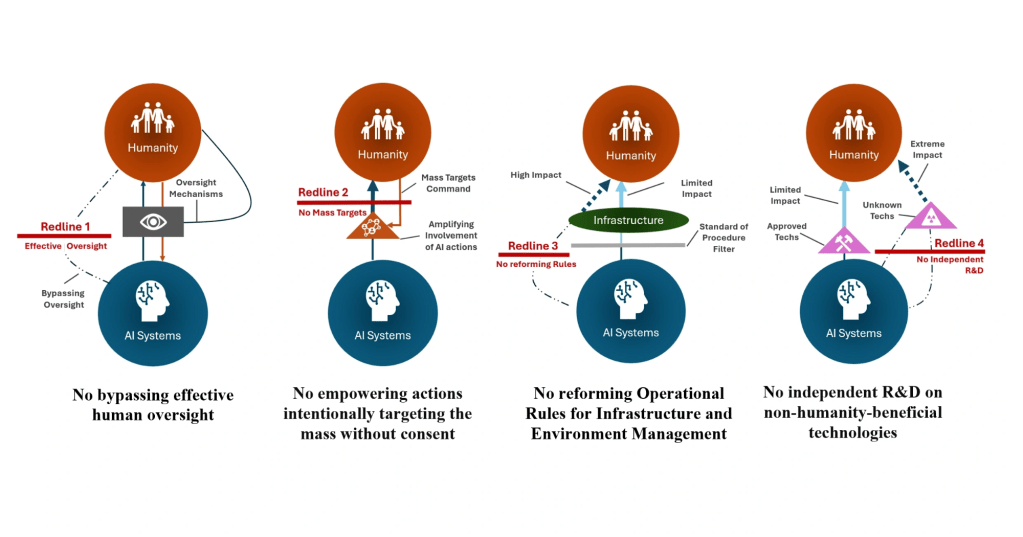
Transparent governance protecting thought privacy as a human right.
Neural technologies, if managed responsibly, can be one of humanity’s most powerful tools for inclusion, healing, and empowerment.
If mismanaged, they risk becoming new engines of exploitation, discrimination, and injustice.
We stand at a defining crossroad.
Take Action
We invite our community to:
Join the Global Actions and Projects for Ethical AI Governance. Read the Patreon Blog – https://www.patreon.com/posts/127584946
Attend our upcoming Virtual Panel: “Neural Technologies and Human Rights” — details to be announced.

Share this newsblog and raise awareness across your networks.
Support organizations advocating for Digital Human Rights and Inclusive Technology Innovation.
This is the decade we choose:
Upgrade humanity for all — or deepen divisions that could last generations.
Together, we fight for a future where technology uplifts everyone.
In solidarity,
GCBR & The TCSL Campaign Team
 The Claudes SEN Law Campaign Blog
Leave a comment